What customers say
RVD SolarSolar design and installation · Pompano Beach, FL
Serving Pompano Beach and nearby towns
RVD Solar is a service for Pompano Beach homeowners on Florida Power & Light (FPL). It would set two or three equipment packages for your roof side by side: panel, inverter and battery spec sheets, warranty terms and a solar-only price per watt. You choose the equipment on paper, then the installer.
Pompano Beach, Florida
RVD Solar installs across Pompano Beach and coastal Broward, where salt air, hurricane ratings and HOA rules narrow the equipment list fast. We set two or three packages beside each other with the spec sheets attached and let you pick.
What customers say
Serving Pompano Beach and nearby towns
What we do
Call or visit
| Phone | (305) 564-9963Call to book an assessment. |
|---|---|
| Office | 12 NE 17th Ave, Pompano Beach, FL 33060Parking on site. |
| Estimates | Free, in writingDesign and price as separate documents. |
Why homeowners pick us
Our story
Installing across Pompano Beach, Lighthouse Point, Wilton Manors and Oakland Park.
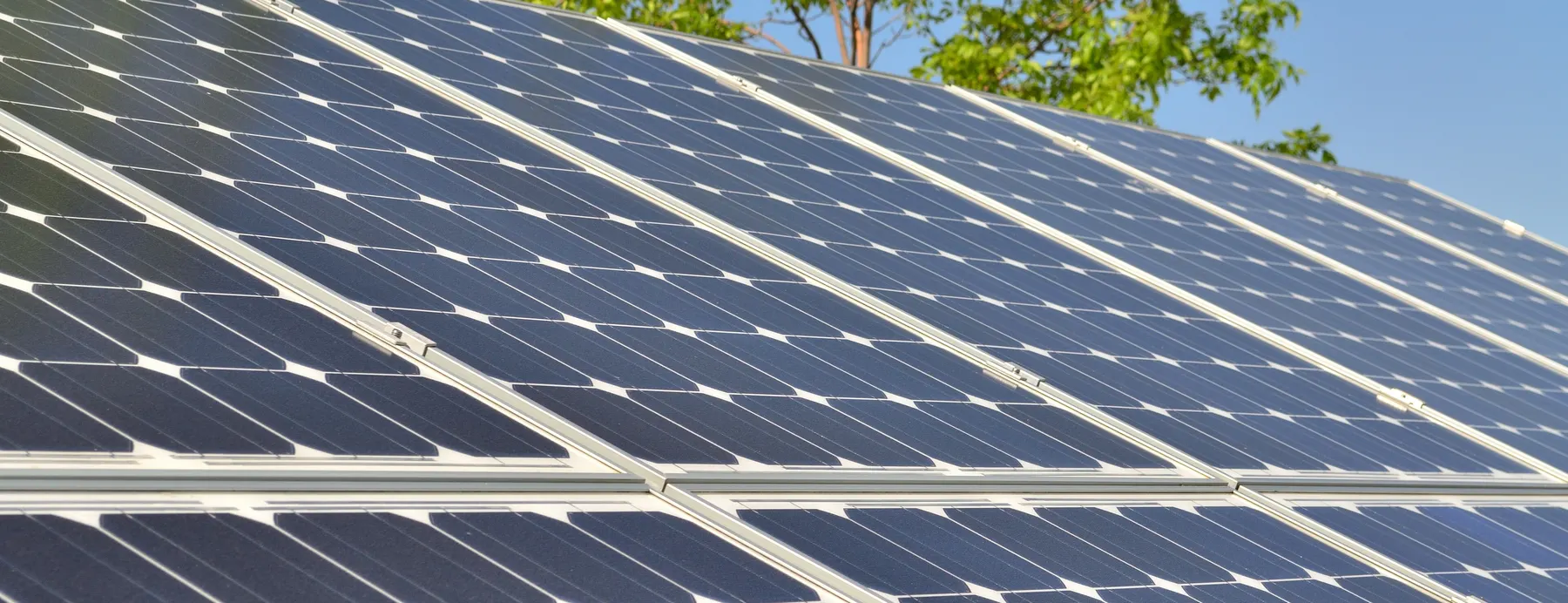
| Row to compare | Datasheet page |
|---|---|
| Rated wattage and count | p. __ |
| Module efficiency | p. __ |
| Temperature coefficient of Pmax | p. __ |
| Product and performance warranty | p. __ |
| Salt-mist test (IEC 61701) and coastal exclusions | p. __ |
| Row to compare | Datasheet page |
|---|---|
| String, optimizers or microinverters | p. __ |
| CEC efficiency | p. __ |
| Enclosure rating | p. __ |
| UL 1741 / IEEE 1547 listing | p. __ |
| Warranty: parts only, or labor too | p. __ |
| Row to compare | Datasheet page |
|---|---|
| Usable kWh | p. __ |
| Continuous kW | p. __ |
| Warranty years and throughput cap | p. __ |
| UL 1741 certification | p. __ |
| Location and temperature limits | p. __ |
Marked rows also feed the FPL application or the warranty sheet.
PanelInverter
Two or three packages for the same roof and the same yearly kWh. Only the equipment changes, so the datasheets do the comparing.
Start the solar checklistPanelInverterBattery
The battery on its own line: usable kWh, continuous kW, the warranty cap and what it keeps running when FPL's grid is down.
Start the battery checklistYour quotes
Type in each quote's panel watts, panel count and price. See the DC size, the FPL tier and the price per watt side by side.
Open the package checkerPut two or three quotes side by side. For each package, enter the panel rating, the panel count and the solar-only price, with the battery, roof work and panel upgrade left out. Everything is calculated on this device; nothing is sent or stored.
DC watts = panel rating × count
FPL rating = DC × 0.85 (Tier 1 up to 10 kW AC)
Price per watt = solar-only price ÷ DC watts
Florida range: most quotes land between $2.10 and $2.70 per watt; the state benchmark is about $2.46 (State benchmark, EcoGen Solar Cost Index, September 2026 Edition). The starting values are the illustrative packages from the worked example, not RVD prices.
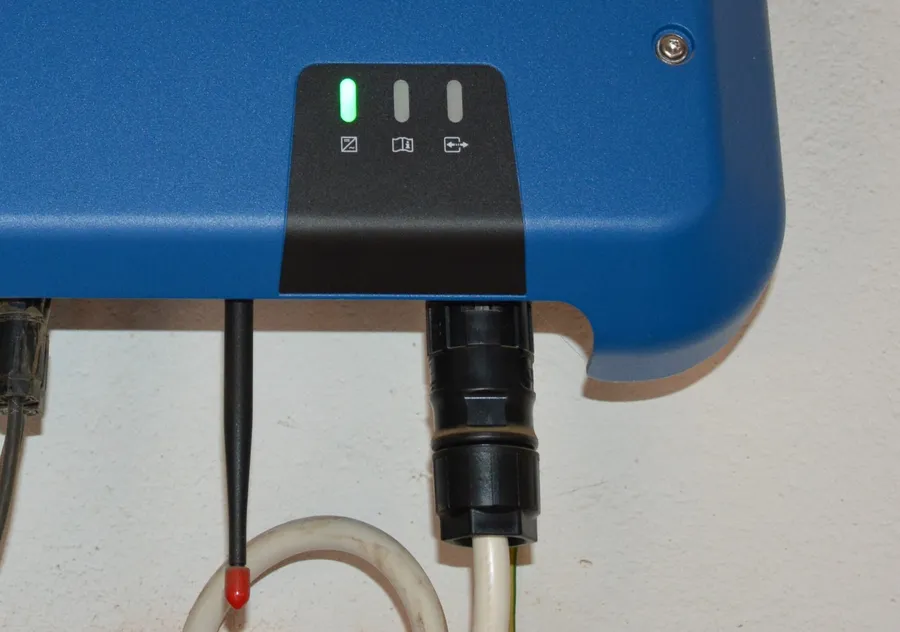
Enable JavaScript to run the package checker.
Pompano Beach already asks for the paperwork. The city's checklist for solar photovoltaic (PV) permits requires "specification sheets and installation manuals for all system components" in the permit file. So datasheets for your panels, inverter and any battery will exist. The question is whether you read them before you sign, or find them later in a permit set built around a choice someone else made.
If you are comparing solar installers in Pompano Beach, Florida, the search results in November 2026 were mostly directory listings, map listings and quote-matching pages. The directory guides checked for this page stop at "check the equipment", and the price figures they print do not agree with each other.
We reverse the order, because the equipment sets three things before any installer does:
Pick the package on paper. Then judge installers on license, permit route and who files with FPL.
How we work. Everything in this section describes how RVD Solar would work if launched. It is a plan, not a record of past jobs.
The quote checklist on this site lists the same items.
About one visit, covering the roof and the electrical side: each roof plane and its shade, attic and framing access, the main panel and meter location, and the distance to salt water for the corrosion rows below.
The panel photo matters more than it looks. FPL's Tier 1 terms cap a system at 90% of your home's electric service rating, so a lower-rated service can limit the system size or add a service upgrade to the quote. The Wilton Manors page looks at that upgrade decision.
Optional, priced separately : a battery package, main-panel upgrade pricing and a monitoring comparison. Three packages is the ceiling.
Ask every bidder to fill the same rows. A blank cell means nobody checked.
| Part | Row to compare | Why it matters |
|---|---|---|
| Panel | Rated wattage and count | Wattage × count = DC capacity, which sets the FPL tier |
| Panel | Module efficiency | How much power each square foot of roof yields; it matters when roof space, not budget, limits the array |
| Panel | Temperature coefficient of Pmax | Output lost per degree of panel heat; a figure closer to zero loses less on hot afternoons |
| Panel | Product and performance warranty, degradation | Defect cover in years; output promised in year 25 or 30, and the yearly decline |
| Panel | Salt-mist test and coastal exclusions | Does the datasheet list a salt-mist test (IEC 61701), and at what severity? Does the warranty exclude sites near salt water? |
| Inverter | String, string with optimizers, or microinverters | Shade tolerance, panel-level data, and where the electronics sit |
| Inverter | CEC efficiency and enclosure rating | The California Energy Commission's weighted efficiency, and how well the box resists water and dust |
| Inverter | UL 1741 listing | FPL requires a UL 1741 / IEEE 1547 listed inverter |
| Inverter | Warranty years and coverage | Parts only, or parts, labor and shipping |
| Battery | Usable kWh and continuous kW | Energy it can actually deliver, and how much load it carries at once |
| Battery | Warranty years and throughput cap | A battery warranty can end at a year count or at a total of energy delivered; ask for both |
| Battery | UL 1741 certification, location and temperature limits | FPL requires behind-the-meter storage to carry UL 1741 certification or sit DC-coupled behind a UL 1741 device |
| Racking | Material, fasteners, Florida Product Approval number | One row: look the number up in the state's Product Approval search and check it matches the product quoted |
String, optimizers or microinverters. A string inverter is one box converting a row of panels. Optimizers add a small device under each panel and keep one central inverter. Microinverters put a full inverter under each panel. More roof electronics can mean better shade handling and per-panel data. They also mean more parts on the roof to warranty.
Salt exposure. Pompano Beach homes sit at very different distances from the ocean and the Intracoastal Waterway. Oceanfront roofs are covered on the Lauderdale-by-the-Sea page. Treat the salt-mist row as a question each datasheet has to answer. Nobody can assume a pass for a product.
If a bidder's figure has no datasheet page behind it, ask for the page.
A warranty's length tells you little until you know how a claim works. The sheet would answer five questions per package, taken from the warranty documents themselves:
Keep the installer's workmanship warranty on its own line. It covers the installer's labor and comes with the installer, not with the package, so it belongs to the second decision.
Then line the sheet up against any loan. The U.S. Treasury's guide to buying and financing solar panels tells buyers to compare the panel warranty with the loan term, to ask whether the lender files a UCC-1 lien (a public notice of its claim on the equipment), and to get every promise in writing. Illustrative example: a 25-year loan against a 10-year inverter warranty means you may pay for a second inverter while still paying for the first. Put a price on that line before you sign.
Illustrative calculation (example prices, not RVD prices). One Pompano Beach roof; a household using 15,600 kWh a year (1,300 kWh a month from 12 FPL bills). Yearly output uses EcoGen's statewide production factor of 1,555 kWh per kW of DC capacity, a reference figure rather than a shade-adjusted estimate for this roof. FPL rating = DC × 0.85. Prices are solar only, before incentives, with no battery or roof work.
| Package A: string inverter | Package B: microinverters | Package C: more panels, string inverter | |
|---|---|---|---|
| Panels | 24 × 410 W | 24 × 430 W | 28 × 440 W |
| DC capacity | 9,840 W | 10,320 W | 12,320 W |
| FPL rating (DC × 0.85) | 8.36 kW AC · Tier 1 | 8.77 kW AC · Tier 1 | 10.47 kW AC · Tier 2 |
| What the tier adds | No FPL application fee | No FPL application fee | $400 fee, $1 million liability insurance, manual disconnect switch |
| Yearly output (Illustrative) | ≈ 15,300 kWh, about 98% of use | ≈ 16,050 kWh, about 103% | ≈ 19,160 kWh, about 123% |
| Year-end surplus (simplified) | none | ≈ 450 kWh | ≈ 3,560 kWh |
| Solar-only price (example) | $24,600 | $27,900 | $30,200 |
| Price per watt (Illustrative calculation) | $2.50 | $2.70 | $2.45 |
DC capacity is the panels' rated watts added together. AC is what reaches your house wiring after the inverter. FPL's interconnection tariff rates an inverter system at its DC nameplate times 0.85. Tier 1 covers up to 10 kW AC, about 11,764 W of panels, with no application fee. Tier 2 adds a $400 application fee, general liability insurance of at least $1 million, and a manual disconnect switch next to the meter.
In this example, Package C has the lowest price per watt and is the weakest buy. Four extra panels push it over the Tier 1 line, and it makes about 3,560 kWh more than the household uses. FPL credits that year-end leftover at a lower as-available rate, not at the retail price (see the money rules below).
Package A sits close to the household's use and stays in Tier 1. It is the plain baseline every other package has to beat.
Package B costs $3,300 more than A for slightly more output and microinverters. It earns that premium when one roof plane has real shade, when you will actually use panel-level monitoring, or when its inverter warranty covers labor and A's does not. On an open, unshaded roof, A may be the better buy.
Households that use more power reach the Tier 1 line with fewer extra panels. The Lighthouse Point page looks at that situation for larger homes.
Use one method on every quote:
EcoGen's Florida solar cost page puts the state at about $2.46 per watt, with a typical 11.09 kW system at $27,281 in cash before incentives (State benchmark, September 2026 Edition of the EcoGen Solar Cost Index, prices as of September 25, 2026, solar only). The same page says most Florida quotes land between $2.10 and $2.70 per watt, a range built from February 2026 data. Under the EcoGen index methodology, the $2.46 figure is a modeled installed price before incentives: a state benchmark, not a quote for your home. Neither page says whether its watts are DC or AC, so this page divides by DC watts as quoted.
Against that benchmark (Illustrative calculation), Package A at $2.50 sits near the benchmark. B at $2.70 sits at the top of the range and needs its equipment rows to justify the difference. C at $2.45 looks cheapest while carrying Tier 2 and a large surplus.
Now fold an example $14,000 battery into B's headline price: $41,900 ÷ 10,320 W = $4.06 per watt (Illustrative calculation). That looks overpriced only because a battery is not solar. Take it out and judge the battery on its own rows.
One more offer can go through the same table. As of November 2026, the city partners with Solar United Neighbors on the Broward County 2026 Solar Co-op; joining closes March 19, 2027, and a members' committee picks one installer for the group. If you join, ask for that installer's package in the same rows.
After you pick a package, FPL and the city set the order.
The roof work is the short part. The DOE says installation "generally takes only a few days, but permits and inspections can take weeks to months".
Florida's licensing statute (section 489.105) lets a certified solar contractor install PV, and other certified or registered contractors work within their own scope. Either way, a license number belongs on the permit, and it should match the company you are paying.
Pompano Beach is FPL territory with no municipal electric system; the name on your bill confirms it.
Read together, these rules point one way: size to yearly use, and treat a large year-end surplus as a warning sign. They also shape the battery question. With one-for-one monthly credits, and FPL barring battery power from being exported to the grid, a battery here buys backup, not a better export price. The Oakland Park page walks through that choice.
Your FPL bill will not tell you how the system is doing. FPL says only your inverter shows the energy the system produced. So put monitoring in the equipment table with everything else. Ask each bidder when you get the monitoring login, and get it before the final payment.
Once a year, compare production with the same months a year earlier. The DOE's guide to buying a house with solar says a year-over-year drop above 10% could indicate maintenance issues. That is when the warranty sheet earns its keep: you already know who files the claim and who pays for the roof work.
FPL's net metering guidelines require the inverter to isolate the system when the grid goes down. A net-metered home can run during an outage only with appropriate equipment, such as a specialized inverter or a battery system. Batteries behind the meter need UL 1741 certification, a placard on the meter enclosure, and may not export stored power to the grid. If backup matters to you, decide it with the package, not after the inspection.
Ask each bidder, in writing:
Coverage of Pompano Beach and nearby towns covers these towns.
EcoGen's September 2026 state benchmark is about $2.46 per watt before incentives, or $27,281 for a typical 11.09 kW system. Your quote will differ with the equipment, roof and electrical work, which is why the method above divides your own solar-only price by your own DC watts.
Not for a system you own that is installed in 2026; the IRS ended the residential credit with 2025. Some directory pages still advertise 26% or 30%.
Not by default. A grid-tied inverter shuts the system off in an outage unless it has equipment built for that, such as a specialized inverter or a battery.
No. One local page calls 10 kW a minimum for subsidies. FPL's line runs the other way: above 10 kW AC you move into Tier 2, with a $400 fee, $1 million insurance and a disconnect switch. Size the system to your use.
A ranked list cannot tell you whether a company's equipment fits your roof, and some list pages disclose paid placement. Compare the packages first. Then check each finalist's license at DBPR, ask who will do the installation, and compare workmanship warranties in writing.
One guide per nearby town, each built around the local rule that changes the equipment decision. Coverage of these towns is proposed and not confirmed.
Choose your town and what you want priced. The page builds the checklist to take to every bidder, so each quote answers the same rows. It runs on this device: nothing is sent or stored.